GME / EBAY Part II - Claude and the M&A Model
I use AI as a partner, not a replacement.
FINANCEM&AAI
Ascendant Training
5/18/20262 min read

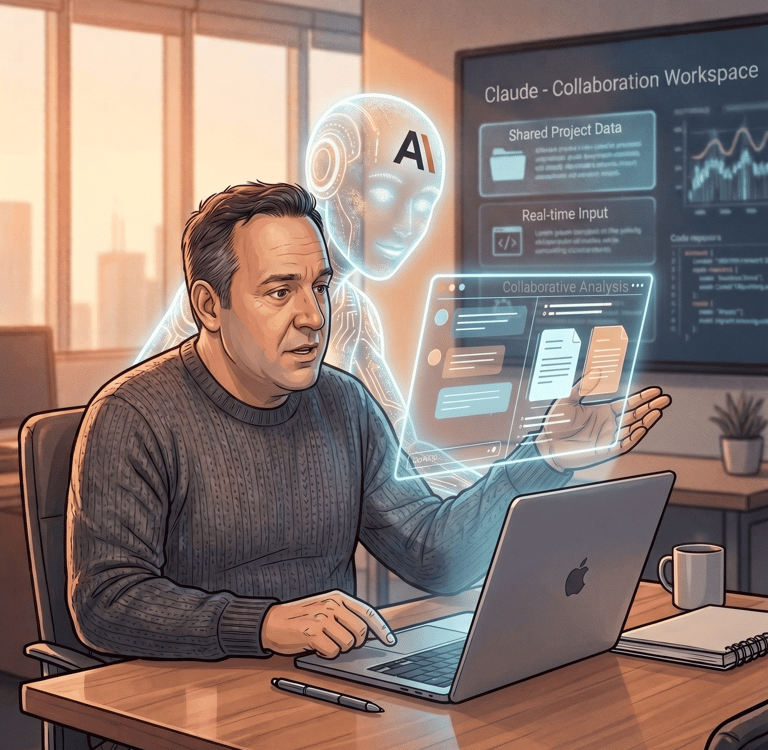
On Friday I wrote about GameStop's unsolicited bid for eBay and used it to walk through how M&A processes actually work. While putting that post together, I decided to run a parallel experiment: I had Claude build a full investment banking-style M&A model for the deal (accretion/dilution analysis, credit statistics, sources & uses, the works). I wanted to test what it could actually do.
A few things surprised me along the way:
1️⃣ It generated its own project name, Project Checkout (the kind we always used in M&A)
2️⃣ It checked its own work as it built, reviewing outputs before moving to the next section
3️⃣ When it caught errors, it iterated and corrected until it was satisfied with the result
4️⃣ It added a clean conditional formatting heatmap to the sensitivity tables to highlight accretion/(dilution). Something I didn't even ask for
The whole thing took under five minutes.
On the surface, the model looked pretty good: It had Transaction Assumptions, Sources & Uses, Standalone Financials, Pro Forma P&L, and Credit Statistics. Formatted cleanly & professionally structured, it was the kind of thing that would pass a first glance from an analyst/associate.
But here's the honest part: when I dug in, there were errors:
- Undiluted share count used in transaction assumptions
- Purchase accounting adjustments and goodwill calc
- some of the pro forma entries
The kind of mistakes a first-year analyst might make. Not easy to see on the surface, but the sort of thing that matters when the model is actually being used.
Which brings me to the real point of this post.
I'm not sharing this to say AI can build a perfect M&A model. It can't – at least not yet (so breathe easy analysts). I'm sharing it because of how I use these tools, and how I think most people should:
I use AI as a partner, not a replacement.
I set it working on something while I focus on something else. When I come back, it's already done the research, built the structure, run the first pass. My job is then to review, pressure-test, and improve, which I can do far faster than if I'd started from a blank spreadsheet.
Like any good partner, it makes mistakes, and that's to be expected. What matters is that it's accelerating the work, not replacing the judgment.
The model it built got me 70-80% of the way there in five minutes. The last 20% or so is the part that actually requires expertise, and that’s still on me.
I’ll still go back to Claude and give it another run, but I’ve also set my own expectations for what can and will happen when I use him (or it 🤔) 🤖
Where Wall Street comes for Training
CONTACT
MAILING LIST
+1-646-801-6208
© 2025 Ascendant Training LLC. All rights reserved.